
Offensive vs Infectious Waste: Disposal Guidelines for Clinics

If you work in any form of medical or aesthetics clinic, knowing how to dispose of offensive waste and infectious waste is essential for hygiene and compliance. At phs, we make dealing with all forms of healthcare waste straightforward, so you can ensure the highest level of health and safety for your premises, team members, and patients.
Let’s take a closer look at the differences between offensive and infectious waste, along with the equipment and processes you need for proper disposal.
Offensive vs infectious waste: What’s the difference?
Accurately classifying waste types is important for effective disposal. By recognising which bins or bags to put your waste in, you can make sure they are processed correctly and in line with health and safety guidelines.
Both offensive waste and infectious waste are commonly generated in clinics and healthcare facilities. But what are the key differences?
- Offensive waste is typically non-infectious and won’t be contaminated with chemicals or pharmaceuticals. Even though this waste is classified as non-hazardous, it can still be unpleasant to handle.
Examples include nappies, sanitary waste, incontinence pads, PPE used in non-hazardous settings, and animal waste such as bedding and faeces. Take a look at our in-depth guide for more details on what counts as offensive waste.
- Infectious waste covers hazardous materials that could be contaminated with pathogens, such as PPE and dressings that have come into contact with bodily fluids, swabs, and laboratory waste.
How to dispose of offensive and infectious waste safely
One of the most important parts of handling offensive and infectious waste is classifying and segregating it. Each waste stream should go in a clearly identifiable bag so that anybody collecting and transporting it has a clear idea of its contents.
Doing so ensures you adhere to the Environmental Protection Act 1990 and Hazardous Waste Regulations 2005 (or the Waste (Scotland) Regulations 2005). These government guidelines are in place to protect staff, patients, the general public, and the environment, helping to prevent the spread of harmful germs.
The regulations set out clear colour coding for proper waste segregation.
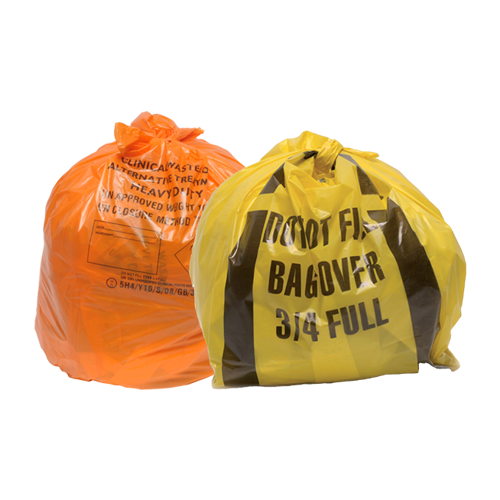
- Offensive waste must be separated from other general waste and stored securely in yellow bags with black stripes (also known as tiger bags)
- Infectious waste must be segregated from other waste and stored securely in yellow bags
- Highly infectious waste must be segregated from other waste and stored securely in orange bags.
Best practices for offensive waste disposal
To make handling offensive waste as easy and stress-free for your team as possible, follow these tips:
- Separate your waste streams at the point of origin. Placing offensive waste directly into a bin lined with a black and yellow tiger bag will prevent the need to segregate materials from other general waste.
- Once a bag is full, tie it up and store it securely away from any public access.
- Store offensive waste bags in a well-ventilated area.
- Partner with a reliable waste management company to ensure offensive waste is collected and disposed of correctly. Look for a company licensed to handle offensive waste.
How to dispose of infectious waste properly
The tips above can also be applied to dealing with infectious waste. However, when dealing with infectious waste, we also recommend that you:
Only fill orange and yellow infectious waste bags to 75% capacity to prevent any overflowing, splits, or spills.
Check storage times for certain types of infectious waste. For example, unrefrigerated anatomical waste should be collected by a licensed waste management company within 72 hours.
Wear PPE when handling infectious waste, even when it’s bagged, and make sure to wash your hands well afterwards.
What happens to offensive and infectious waste once it is collected?
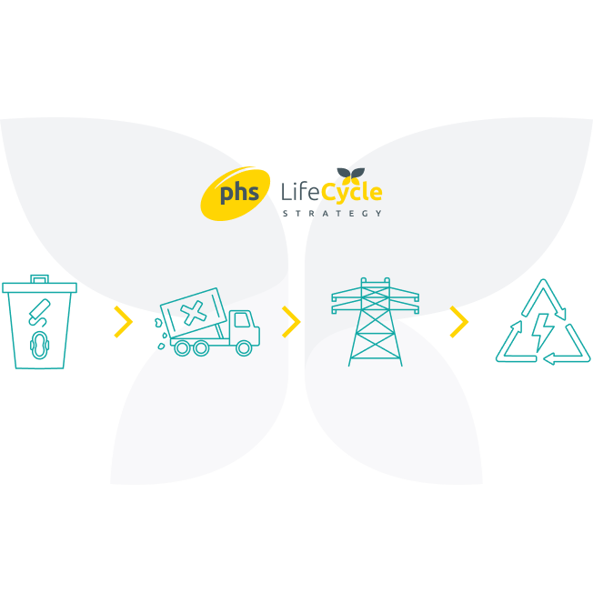
How you bin and store offensive or infectious waste is only one part of the disposal journey. Once a licensed waste collector has picked up your orange, yellow, or tiger bags, they will transport them for processing.
Infectious waste must be incinerated at a very high temperature or otherwise sterilised in a dedicated treatment centre.
Offensive waste may be taken to landfill. However, when you partner with phs, you can have peace of mind knowing that our Lifecycle Strategy provides a sustainable alternative.
We divert offensive waste away from landfill, sending it instead to a state-of-the-art energy-from-waste (EfW) facility. Here, it is transformed into energy to help power homes, schools, and businesses through the National Grid.
Partner with phs for sustainable offensive and infectious waste disposal
Safety, hygiene, and sustainability are at the heart of what we do at phs. We’re dedicated to providing compliance-ready waste bags that are made from up to 97% recycled content, offering streamlined waste collection services, and turning offensive waste into sustainable energy.
Feel free to contact us to learn more about our waste management services.